
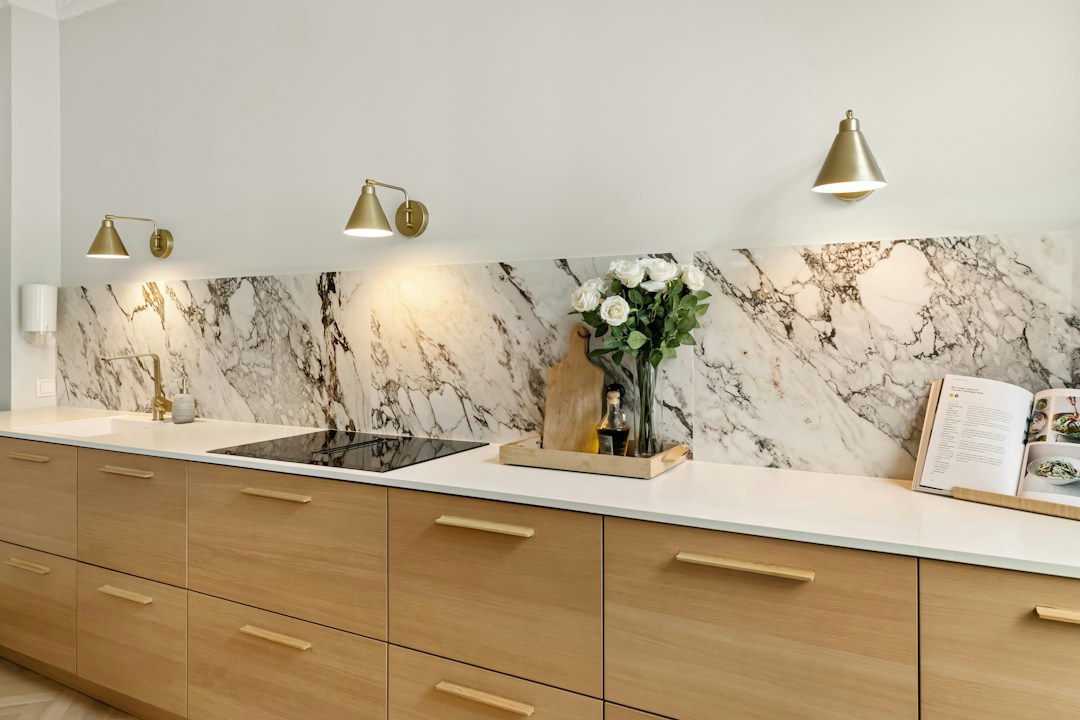
A kitchen splashback may occupy only a strip of wall, but it has an outsized influence on how the whole room feels. It connects the worktop to the cabinetry, catches the light, protects hardworking surfaces and can either quietly unify a scheme or become its defining feature. In a luxury kitchen, the best choice is rarely about following a trend alone. It is about finding the right balance of material, proportion, maintenance and character.
From dramatic bookmatched stone to understated handmade tiles, the options are broad. The right splashback should feel considered alongside the worktop, cabinetry, lighting and architecture—not like a final detail chosen in isolation.
Start with the overall character of the kitchen
Before comparing samples, decide what role the splashback should play. In a calm, minimalist kitchen, a continuous surface in a similar tone to the worktop can create a clean, architectural appearance. In a more expressive room, a veined stone or richly coloured tile can introduce contrast and personality.
Look at the fixed elements first: cabinet colour, floor finish, worktop and the amount of natural light. A cool white stone may look crisp beside pale grey cabinetry, while a creamy limestone effect or warm marble can sit more comfortably with oak, walnut and brass. Samples should be viewed in the actual room at different times of day, because artificial and natural light can change undertones significantly.
Natural stone: distinctive and full of character
Marble and other natural stones offer variation that is difficult to reproduce convincingly. Veining can bring movement to a restrained scheme, especially when the splashback is cut from the same slab as the worktop. Continuing the stone up the wall creates visual continuity and can make a compact kitchen feel more composed.
Natural stone is not maintenance-free, however. Some varieties are porous or sensitive to acids, and polished surfaces may show etching from lemon juice, vinegar or other everyday ingredients. Ask the supplier about sealing, cleaning and the stone’s suitability for the intended cooking area. If you love a material’s natural patina, its changing appearance may be part of the appeal; if you prefer an immaculate surface, a more forgiving alternative may suit you better.
Porcelain and engineered surfaces: a practical alternative
Large-format porcelain can deliver a stone-inspired look with consistent performance and relatively few grout lines. It is available in finishes that suggest marble, limestone, concrete and other architectural materials. Fewer joints can also make cleaning easier, particularly behind a hob where grease and cooking residue accumulate.
Engineered quartz is another option, but its suitability behind a hob depends on the manufacturer’s heat guidance and the specific installation. Do not assume every worktop material can automatically be used as a splashback in every position. Confirm temperature limits, required clearances and compatible adhesives with the fabricator and appliance manufacturer before specifying the material.
Tiles bring texture, rhythm and craftsmanship
Tiles are ideal when a kitchen needs texture rather than a single uninterrupted plane. Handmade ceramic tiles bring subtle variation, while zellige-inspired surfaces reflect light unevenly and create a lively, tactile finish. Slim brick-shaped tiles can feel classic or contemporary depending on their colour, grout and layout.
Scale matters. Small tiles introduce more grout lines and visual rhythm; larger tiles feel quieter and more seamless. Grout should be selected as carefully as the tile itself. A close colour match creates a softer field, while contrasting grout emphasises the pattern. In areas exposed to regular splashes, choose a grout and sealant system appropriate to the tile and follow the installer’s maintenance advice.
Consider glass, metal and statement finishes
Back-painted glass offers a smooth, reflective surface that can work particularly well in contemporary kitchens. It is visually light and easy to wipe down, although colour matching and the detailing around sockets and edges need careful planning.
Stainless steel can bring a professional, understated character to a cooking zone and pairs naturally with many appliances. Brushed brass or other decorative metals can add warmth, but finishes vary in how they respond to fingerprints, cleaning products and time. Use specialist guidance for installation and cleaning, and consider whether the material will develop a patina or need frequent attention to retain its original appearance.
Think beyond the material: height, joints and edges
A beautiful material can lose impact if its proportions are poorly resolved. A low upstand gives a subtle transition between worktop and wall; a full-height splashback creates a stronger, more architectural statement. Behind a hob, the correct height and coverage must also meet practical requirements and any relevant appliance instructions.
Plan socket positions, extractor details, corner junctions and end returns before fabrication. With veined stone, discuss how the pattern will run across joins and whether the fabricator can achieve a pleasing bookmatch. With tiles, set out the layout so narrow cuts do not appear in prominent positions. These details are often what make a bespoke kitchen feel finished.
Make maintenance part of the design decision
The best-looking option on a sample board is not necessarily the best option for your routine. Consider how often you cook, whether you fry frequently, how quickly you want to clean the room and whether you are comfortable with natural variation. A glossy surface may reflect light beautifully but show fingerprints; textured tile may add depth but require more care around grout lines.
Ask for written care instructions before committing. Avoid using harsh cleaners or abrasive pads unless the manufacturer confirms they are suitable. A realistic maintenance plan helps preserve the finish and prevents an expensive material from becoming a source of frustration.
Bring the whole scheme together
For a timeless result, repeat a small number of tones and finishes rather than making every element compete for attention. A stone splashback can echo the worktop while contrasting gently with timber cabinetry. A handmade tile can introduce colour that is picked up in a pendant or a piece of art. Metal details can connect taps, handles and lighting without requiring every finish to match exactly.
Order generous samples where possible and view them together, not separately. Check them against cabinet doors, flooring and worktop samples in the room’s actual light. If the splashback has strong veining or colour, allow it to be the focal point and keep neighbouring finishes quieter.
Final thoughts
A luxury kitchen splashback should be beautiful at first glance and sensible in everyday use. Natural stone offers individuality, porcelain brings a practical interpretation of architectural surfaces, tiles add craftsmanship, and glass or metal can sharpen a contemporary scheme. The most successful choice is the one that suits the way you live, complements the materials around it and has been detailed carefully from the start.
Give the splashback the same attention as the worktop and cabinetry. With thoughtful material selection, considered proportions and proper installation, this relatively small area can make the entire kitchen feel more cohesive and complete.
Image credit: Lisa Anna via Unsplash.